Dry Scrubber For Chlorination in Germany
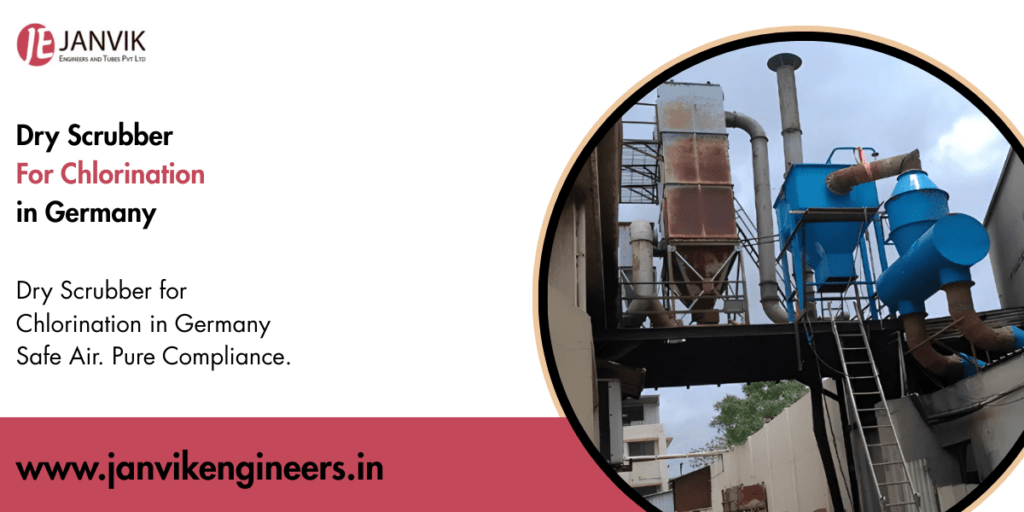
Table of Contents
Introduction
Established in 2010, Janvik Engineers and Tubes Pvt. Ltd. has grown into a trusted and reputable organisation dedicated to supplying a comprehensive range of industrial solutions. Our product portfolio includes Industrial Blowers, Dust Control Systems, Dust Suppression Units, Odour Control Systems, Industrial Evaporators, Anti-Smog Guns for maintaining AQI levels in major cities, Industrial Furnaces, and various Industrial Machines.
Air quality control and environmental compliance are non-negotiable in contemporary industrial processes. Germany, which is renowned for its sophisticated manufacturing base and strict environmental regulations, requires effective air pollution control systems, particularly when it comes to dangerous chemicals like chlorine. In Germany, dry scrubbers for chlorination have become a reliable option for businesses looking for economical, effective, and legal scrubbing solutions.
As a world leader in industrial pollution control engineering, Janvik Engineers & Tubes Pvt. Ltd. is at the forefront of providing high-end dry scrubber solutions.The importance of dry scrubbers in chlorination facilities throughout Germany is examined in this article, along with its main advantages, industrial uses, legal requirements, and the reasons Janvik Engineers & Tubes Pvt. Ltd. is the go-to partner for these vital systems. We are the best Dry Scrubber For Chlorination Manufacturer.
Why Are Dry Scrubber For Chlorination
Chlorination procedures are used for disinfection, synthesis, and processing in Germany’s industries, particularly in the chemical, pharmaceutical, water treatment, and manufacturing sectors. Chlorine gas is essential to these processes, but if released improperly, it can be extremely poisonous and hazardous to the environment. Leaks of any size can endanger worker safety and taint the air. Germany has strict emission regulations in place to control these concerns. Facilities need to implement technologies that efficiently capture or neutralise emissions of chlorine. Dry scrubber for chlorination in Germany is essential in this situation since it offers strong protection and comply with both national and EU environmental standards. We are the best Dry Scrubber For Chlorination Supplier.
Why Choose Janvik Engineers
1. Compliance with Germany’s Stringent Environmental Regulations
- Germany follows some of the most rigorous environmental standards in Europe, including TA Luft, BImSchG, and the EU Industrial Emissions Directive (IED) norms. Chlorine gas is highly toxic, and even minor leaks can lead to severe environmental and legal consequences. Dry scrubbers are highly effective in neutralising chlorine gas using dry chemical media, ensuring emissions remain well within permissible limits. This makes them a preferred solution for German industries aiming to maintain full regulatory compliance without operational risk.
2. High Safety Standards for Chlorination Applications
- Worker safety is a top priority in Germany’s industrial sector. Dry scrubbers provide instant neutralisation of chlorine gas in the event of leaks, cylinder changeovers, or emergency releases. Unlike wet scrubbers, dry scrubbers operate without liquid handling, eliminating risks such as corrosive liquid spills, pump failures, or wastewater contamination. This makes them ideal for indoor chlorination rooms, water utilities, and confined industrial spaces.
3. Low Maintenance and Operational Reliability
- German industries value precision engineering and long-term reliability. Dry scrubber systems are known for their simple design, fewer moving parts, and low maintenance requirements. There is no need for wastewater treatment, sludge disposal, or continuous liquid monitoring. This results in reduced downtime, lower operating costs, and consistent performance—key factors for industries that demand uninterrupted operations.
4. Environmentally Sustainable Solution
- Sustainability is a core focus across Germany’s industrial landscape. Dry scrubbers support this goal by producing no liquid effluent and minimising secondary pollution. The spent dry media can be safely handled and disposed of according to German waste management regulations, making dry scrubbers an environmentally responsible choice for chlorination systems.
5. Compact Design and Space Efficiency
- Space optimisation is often critical in German industrial facilities, especially in retrofitting older plants. Dry scrubbers feature a compact footprint, making them easy to install in existing chlorination setups without major structural changes. Their modular design also allows for scalability, enabling industries to expand capacity as operational needs grow.
6. Ideal for Emergency Chlorine Gas Neutralisation
- In Germany, risk mitigation and emergency preparedness are essential parts of industrial planning. Dry scrubbers act as a passive safety system, automatically neutralising chlorine gas during accidental leaks or system failures. This makes them highly suitable for water treatment plants, chemical storage facilities, and municipal utilities where chlorine safety is non-negotiable.
7. Cost-Effective Over the Long Term
- Although the initial investment may be comparable to wet scrubber systems, dry scrubbers offer lower lifecycle costs. Savings come from reduced energy consumption, minimal maintenance, no wastewater handling, and longer service intervals. For German industries focused on efficiency and total cost of ownership, dry scrubbers provide excellent long-term value.
8. Trusted Technology for German Industries
- Dry scrubber systems are widely adopted across Germany in sectors such as municipal water treatment, chemical processing, pharmaceuticals, pulp & paper, and power generation. Their proven performance, compliance readiness, and safety advantages make them a trusted choice for chlorination applications.
9. End-to-End Project Support
- From initial consultation and process evaluation to installation, commissioning, and after-sales service, Janvik Engineers & Tubes provides comprehensive support throughout the project lifecycle. Our field engineers ensure your dry scrubber system operates efficiently from day one.
10. Quality Assurance & Compliance Focus
- We adhere to stringent quality control measures during manufacturing to ensure every dry scrubber system meets performance, safety, and compliance benchmarks. Our documentation support also assists clients with regulatory reporting and certifications required within Germany.
11. Competitive Pricing & Value Delivery
- While premium performance and customisation are standard with Janvik solutions, our pricing remains competitive. We help clients achieve emissions compliance without excess spending, making us a preferred partner for industries where environmental and financial considerations go hand in hand.
Applications of Dry Scrubber for Chlorination
1. Chemical Manufacturing
- Chemical plants utilise chlorine gas extensively — for producing PVC, solvents, and speciality chemicals. During processing, leaks or vent emissions can occur. A dry scrubber system:
- Neutralises chlorine gas
- Prevents corrosion in ductwork and equipment
- Enhances plant safety
2. Water Treatment and Chlorination Systems
- Municipal and industrial water plants in Germany commonly use chlorine for disinfection. Waste streams and off-gases here can contain chlorine or chloramine by-products.
- Air quality near chlorination units
- Safety for operators
- Compliance with local emission standards
3. Waste Gas Treatment in Electroplating and Surface Finishing
- Processes such as electroplating emit chlorinated gases due to metal-chloride chemicals. Installing dry scrubbers in exhaust lines:
- Captures acid gases
- Reduces corrosion
- Extends equipment life
4. Chemical Laboratories and Research Facilities
- Even in smaller scales, research labs that handle chlorine or chlorinated reagents benefit from dry scrubbers. These systems offer:
- Compact footprint
- Effective gas neutralisation
- Enhanced indoor air quality
5. Pharmaceutical & Speciality Chemical Plants
- German pharmaceutical plants use chlorination for synthesis pathways in active pharmaceutical ingredient (API) production. These sensitive environments require:
- Ultra-high purity performance
- Reliable gas control
- Compliance with strict environmental and health standards
6. Pharmaceutical Manufacturing
- In Germany’s pharmaceutical sector, dry scrubbers are applied to ensure controlled handling of chlorine-based compounds used in drug synthesis and sterilisation processes. The dry system ensures contamination-free operation, which is critical for GMP compliance.
- Clean, dry absorption technology
- Minimal process interruption
- High safety assurance
7. Pulp & Paper Industry
- Chlorine and chlorine dioxide are used for bleaching processes in pulp and paper mills. Dry scrubbers effectively neutralise chlorine emissions, helping mills meet Germany’s strict air quality and worker safety requirements.
- Bleaching chemical handling areas
- Emergency gas release management
- Environmental compliance systems
8. Food & Beverage Processing Plants
- Dry scrubbers are used in food processing units where chlorine is applied for sanitisation and hygiene control. German food manufacturers prefer dry scrubbers due to their compact design and hygienic operation.
- Safe sanitisation processes
- No wastewater generation
- Space-efficient installation
9. Power Plants & Energy Facilities
- In thermal and industrial power plants, chlorine is used for cooling water treatment and biofouling control. Dry scrubbers provide reliable safety systems to neutralise chlorine gas leaks during storage or dosing.
- Protection of plant personnel
- Compliance with industrial emission limits
- Reliable emergency response system
Specification Table Dry Scrubber For Chlorination
| Parameter | Typical Value / Range |
|---|---|
| Material | Dry Scrubber For Chlorination |
| Application | Chlorination Exhaust Treatment |
| Gas Type | Chlorine (Cl₂), HCl, Acidic Gases |
| Operating Temperature | Up to 250°C (Standard) |
| Gas Flow Rate | 500–50,000 m³/hr (Custom Options) |
| NOx/SOx Removal Efficiency | Up to 99% (Application Dependent) |
| Media Type | Activated Alumina / Sodium Bicarbonate / Lime Mix |
| Construction Material | FRP / PP / SS316L / HDPE |
| Pressure Drop | 50–150 mm Wg (Application Dependent) |
| Access Doors | Quick-Access Bolted Door System |
| Instrumentation | Inlet/Outlet Temp & Pressure Gauges |
| Control Panel | Optional PLC/SCADA Integration |
| Installation Type | Skid / Field Erected |
| Maintenance | Media Change-out Every 2,000–6,000 Operating Hours |
| Compliance Standards | EU IED / BImSchG / TA-Luft Compatible |
Benefits of Dry Scrubber Systems for Chlorination
1. Effective Removal of Chlorine and Acid Gases
- Dry scrubbers are designed to neutralise acidic gases, including chlorine derivatives like hydrogen chloride, by contacting polluted air with solid sorbent materials (e.g., activated carbon, alkaline media). The chemical reactions that occur in the dry media significantly reduce these pollutants before they are released to the atmosphere. In chlorination operations, capturing and neutralising chlorine emissions is essential because these gases are highly corrosive and hazardous to human health and the environment.
Conclusion2. Zero Wastewater Generation: A Major Environmental Advantage
- One of the biggest environmental benefits of dry scrubber systems is that they operate without using water for scrubbing. Unlike wet scrubbers, which spray water or liquid solutions into the exhaust gas stream and create large volumes of contaminated wastewater that must be treated or discharged, dry scrubbers use solid sorbents to capture pollutants. This eliminates the need for wastewater management systems.
Why this matters in Germany:
- Water is a strictly regulated resource under both EU and German environmental law.
- Wastewater discharges are subject to rigorous permitting, monitoring, and treatment requirements.
- Avoiding wastewater generation simplifies compliance with these regulations and reduces treatment costs.
3. Lower Operating Costs and Simpler Maintenance
- Dry scrubber systems typically require fewer auxiliary systems than wet scrubbers. Because they do not use circulating water, there’s no need for water pumps, corrosion-resistant materials, or extensive wastewater treatment infrastructure.
Economic benefits include:
- Reduced energy consumption (no need for water circulation or heating/cooling loops).
- Less frequent maintenance (minimal corrosion issues).
- Lower labor and chemical costs related to wastewater handling and disposal.
4. Small Physical Footprint and Easy Integration
- Dry scrubbers are generally more compact than wet scrubber systems. They don’t need tanks, pumps, or large water treatment facilities, which means they take up less floor space and are often easier to retrofit into existing chlorination installations.
Advantages of compact design in Germany:
- Many industrial sites in Germany are space-constrained.
- Retrofitting older plants without major construction is a significant cost advantage.
- Compact systems help meet local zoning and plant layout requirements.
5. Compliance with Germany’s Stringent Air Quality Standards
- Germany enforces some of the strictest air pollution regulations in Europe, both at the federal level and across Länder (states). Dry scrubbers help companies consistently meet these demanding emission limits by reliably reducing hydrogen chloride and related gases.
Compliance benefits include:
- Avoiding fines and regulatory sanctions.
- Maintaining operational permits.
- Demonstrating environmental stewardship to authorities and communities.
6. Enhanced Workplace Safety and Public Health Protection
- Chlorine and its associated acidic gases pose serious health risks, including respiratory irritation, corrosion of equipment, and increased risk of chronic disease at high exposures. By efficiently removing these harmful components from process emissions, dry scrubbers create safer conditions for:
- Plant workers
- Nearby communities
- Sensitive ecosystems
7. Simplified Waste Handling: Solid Byproducts vs. Liquid Streams
- Dry scrubbers generate solid byproducts (spent sorbent materials) rather than liquid effluent. These solids are usually easier to handle, store, and dispose of under solid waste regulations compared with liquid wastewater requiring complex treatment.
Advantages of solid byproducts:
- Volume is generally lower than that of wastewater from wet systems.
- Solid waste can sometimes be repurposed depending on chemical composition.
- Disposal under established regulated waste channels is often simpler.
8. Environmental Sustainability and Corporate Responsibility
- Germany’s industrial sector is increasingly aligning with EU climate and sustainability objectives. Dry scrubber systems support corporate environmental strategies by:
- Reducing overall emissions and carbon footprint
- Avoiding water purification impacts
- Aligning with circular economy principles through efficient resource use and reduced waste
9. Flexible Technology Adaptable to Varied Industrial Uses
- Although this article is focused on chlorination, dry scrubber technology is versatile and can be tailored to other emissions challenges across industries such as:
- Chemical production
- Waste-to-energy plants
- Metal finishing
- Cement manufacturing
10. Supporting Germany’s Environmental Leadership in the EU
- Germany enforces EU air quality directives that require ongoing reductions in industrial emissions. Dry scrubber systems help companies align with:
- EU Industrial Emissions Directive (IED)
- National Emission Ceilings
Types of Dry Scrubbers for Chlorination
1. Packed Bed Dry Scrubbers
- Packed bed scrubbers consist of a fixed bed of solid sorbent material — often alkaline pellets, granules, or engineered media — through which contaminated gas passes. As the gas flows upward, pollutants chemically react with the media.
Key Features:
- High removal efficiency for acidic gases
- Uniform gas-solid contact
- Easy replacement of spent media
2. Fixed Sorbent Dry Scrubbers
- In fixed sorbent scrubbers, the gas stream is directed through a cartridge or vessel filled with a predetermined amount of sorbent (e.g., sodium bicarbonate, activated carbon).
Advantages:
- Compact design
- Predictable performance
- Minimal auxiliary systems
3. Cartridge/Canister Dry Scrubbers
- These scrubbers utilise replaceable cartridges or canisters filled with specific sorbent blends optimised for chlorine, HCl, and other chlorinated by-products.
Benefits:
- Tool-free cartridge replacement
- Tailored sorbent formulations
- Decentralized installation
4. Fluidised Bed Dry Scrubbers
- Fluidised beds suspend granular sorbent in a gas stream, creating a highly turbulent environment that maximises gas-solid contact.
Benefits:
- High efficiency for mixed pollutants
- Self-regenerating sorbent circulation
- Lower pressure drop
5. Rotary Dry Scrubbers
- Rotary scrubbers rotate solid sorbent material within a drum while contaminated gas flows through. The rotation enhances contact and increases reaction efficiency.
Benefits:
- Uniform media utilisation
- Can handle fluctuating gas volumes
- Low maintenance requirements
Conclusion
Controlling chlorination gas emissions is critical for maintaining air quality, protecting public health, and staying compliant with environmental regulations — especially in a country like Germany with strong ecological governance. Dry scrubbers for chlorination deliver a practical, efficient, and economical solution for industries facing the challenges of toxic gas emissions. We are the best Dry Scrubber For Chlorination Exporter in Hamburg.
Janvik Engineers & Tubes Pvt. Ltd. stands at the forefront of this technology, offering tailor-made dry scrubber systems engineered for performance, sustainability, and compliance. Whether you are operating in water treatment, chemical manufacturing, or any sector involving chlorination processes, partnering with Janvik ensures reliable pollution control and long-term operational excellence.